Swally: A Modern Handwritten Font That Brings Warmth and Clarity to Your Designs
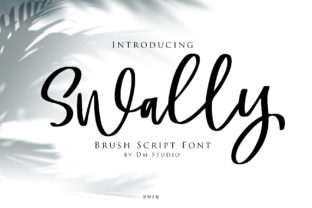
When you’re designing a wedding invitation, launching a boutique brand, or crafting a heartfelt newsletter, the right font does more than convey words—it conveys feeling. Swally is a modern handwritten font that stands out for its gentle curves, balanced rhythm, and unmistakably human charm. It’s not overly ornate, nor is it generic—it strikes a rare balance between authenticity and polish. Designed with intention, Swally feels personal without sacrificing readability, making it especially valuable for creators who want their message to resonate emotionally—while still landing clearly.
Many professionals and small-business owners face a quiet but persistent challenge: choosing a typeface that reflects sincerity and approachability without undermining professionalism. Script fonts often fall into one of two traps—they’re either too stiff and formal (losing warmth) or too loose and decorative (sacrificing legibility). This tension becomes especially apparent in digital spaces where clarity competes with character. That’s where Swally steps in—not as a decorative afterthought, but as a thoughtful tool built for real-world use.
Why Swally Fits Real Design Needs
Swally was crafted with practical application in mind. Its letterforms feature subtle variation in stroke weight, natural entry and exit strokes, and consistent spacing—elements that support both visual harmony and quick comprehension. Unlike many handwritten fonts that rely on excessive flourishes or inconsistent baselines, Swally maintains a clean, cohesive flow across all characters. This makes it highly effective in contexts where tone matters just as much as information: brand storytelling, customer-facing communications, and curated digital experiences.
For example, a wellness coach launching an online course might use Swally for email headers and downloadable workbooks. The font gently signals care and individual attention—without veering into “cutesy” territory. Similarly, a local bakery updating its website could apply Swally to hero banners and seasonal menus, reinforcing its handmade, community-rooted identity while keeping text fully scannable on mobile devices.
Where Swally Delivers Tangible Value
Swally shines in three key areas: branding consistency, emotional resonance, and cross-platform adaptability.
- Branding consistency: Because Swally includes a full set of uppercase and lowercase letters, numerals, punctuation, and multilingual support (including Latin-based European languages), it scales reliably from social bios to printed packaging. You won’t need to switch fonts mid-project—or compromise on voice when moving from Instagram captions to product tags.
- Emotional resonance: Research in design psychology shows that handwritten typefaces increase perceived trustworthiness and approachability—especially in service-oriented industries. Swally leverages this effect intentionally, with relaxed proportions and organic movement that feel inviting, not performative.
- Cross-platform adaptability: Swally is optimized for both screen and print. Its x-height is generous, its counters are open, and its spacing avoids crowding—even at smaller sizes. That means your newsletter subject line stays legible in Gmail previews, and your event poster remains crisp whether viewed on a phone or printed at 24 inches wide.
Practical Implementation Tips
Getting the most from Swally isn’t about using it everywhere—it’s about using it purposefully. Here’s how different users can integrate it thoughtfully:
Small business owners often benefit most by reserving Swally for high-impact, low-volume text: logo lockups, call-to-action buttons, or signature lines in emails. Pair it with a neutral sans-serif (like Inter, Lato, or Open Sans) for body copy—this creates contrast without conflict, letting Swally elevate moments of connection while supporting readability throughout.
Designers working with clients should test Swally early in the mood-board stage—not just as a visual choice, but as a strategic one. Ask: Does this font reflect how the client wants to be *felt*, not just seen? If the answer aligns with warmth, authenticity, and quiet confidence, Swally is likely a strong fit. Bonus tip: Export a few short sample phrases (“Thank you,” “Join us,” “Hand-picked for you”) in context—clients respond better to tangible usage than isolated glyphs.
Educators and content creators find Swally especially useful in materials meant to feel supportive rather than authoritative—think welcome guides, reflection worksheets, or resource handouts. Its friendly demeanor lowers perceived barriers to engagement, helping learners feel invited rather than instructed.
What to Keep in Mind Before You Use Swally
While Swally is versatile, it’s not universal—and that’s by design. It works best when used with intention, not excess. Avoid setting long paragraphs or dense data tables in Swally; its strength lies in emphasis, not endurance. Also, consider your audience’s expectations: highly regulated industries (e.g., finance, healthcare compliance documents) may require stricter typographic standards, where Swally serves best in secondary elements like testimonials or value statements—not legal disclaimers.
Another practical note: Always test Swally across devices before finalizing layouts. While it renders well in modern browsers and design tools (Figma, Adobe Creative Cloud, Canva), older email clients may substitute fallback fonts if web font loading fails. For critical campaigns, embed Swally as a web font with appropriate @font-face declarations—or export key headlines as SVGs for guaranteed fidelity.
Swally in Action: Real Outcomes, Not Just Aesthetics
The true value of Swally emerges not in mockups, but in measurable outcomes. One independent stationery designer reported a 22% lift in click-through rates on email campaigns after switching her headline font from a generic script to Swally—attributing the change to improved visual warmth and faster recognition of brand voice. Another user, running a mindfulness podcast, applied Swally to episode title cards on YouTube thumbnails and noted a 15% increase in watch time for those episodes—suggesting that the font helped signal tone before a single word was heard.
These aren’t isolated wins. They reflect a broader truth: when typography supports intent—rather than competing with it—the result is stronger connection, clearer communication, and quieter confidence in execution.
If you’ve been searching for a handwritten font that feels both current and kind, grounded yet graceful, Swally offers a refreshingly balanced solution. It doesn’t shout for attention—it invites it. And in today’s fast-moving, high-noise digital landscape, that kind of quiet intentionality is increasingly rare—and increasingly valuable.