Amigueta Script: Dynamic & Pretty
If you’ve ever stared at a blank design canvas wondering how to inject warmth, personality, and quiet confidence into your work—without sacrificing polish—Amigueta Script is likely the answer you didn’t know you needed. It’s not just another script font. It’s a carefully balanced blend of spontaneity and structure: fluid enough to feel handmade, deliberate enough to hold its own in professional contexts.
A Font That Breathes With Your Brand
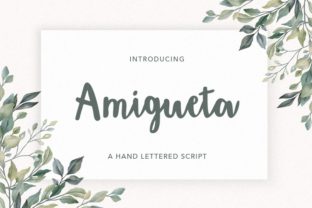
Amigueta Script lives in the sweet spot between elegance and approachability. Its letterforms feature subtle contrast, soft entry and exit strokes, and gentle swashes that never overwhelm. Unlike many script fonts that lean heavily into ornate flourishes or rigid calligraphic formality, Amigueta feels grounded—human, even. The lowercase a, g, and y have open counters and relaxed proportions; capitals carry presence without shouting. There’s no forced quirkiness here—just quiet intention in every curve.
This isn’t a “one-trick” display font. It works because it’s both dynamic and pretty—not in spite of those qualities, but because they coexist so naturally. That duality makes it unusually versatile: equally at home on a hand-poured candle label as it is in a boutique newsletter header or a wedding invitation suite.
Where Amigueta Script Earns Its Keep
Think of Amigueta Script as your go-to for moments where tone matters more than neutrality. It shines brightest when used intentionally—not as body text, but as a strategic voice. In branding, it adds warmth to service-based businesses (think yoga studios, holistic wellness practices, or independent bookshops) without veering into cliché. As a logo design element, it lends memorability while retaining legibility at small sizes—especially when paired with a clean sans serif for balance.
In editorial design, it elevates cover lines, pull quotes, or section headers in lifestyle magazines or indie zines. For packaging design, it brings tactile charm to artisanal food labels, skincare boxes, or stationery lines—communicating care and craftsmanship before a single word is read. On social media graphics, it helps cut through noise: an Instagram story quote or Pinterest pin title gains instant visual distinction without needing extra effects or overlays.
It also performs well in web design—but with nuance. Use it sparingly: hero headlines, CTA buttons with ample spacing, or subtle accent text. Avoid long paragraphs or low-contrast backgrounds. Its strength lies in impact, not endurance.
Readability Isn’t Optional—It’s Contextual
Amigueta Script isn’t built for dense reading, and that’s by design. As a premium script font, it belongs in the display category—not body copy. That said, its readability is stronger than many peers in its class. The x-height is generous, spacing is thoughtfully open, and character shapes avoid excessive ambiguity (no confusing l/i/1 collisions). Still, test early: render it at 24px on mobile, then at 16px on desktop. If letters begin to blur or rhythm falters, scale back usage or switch to a supporting typeface.
For print projects, especially smaller formats like business cards or tags, consider using only the standard weight—avoiding ultra-thin variants unless output resolution is high and viewing distance is controlled. A laser-printed business card won’t reproduce fine hairlines the same way a letterpress run will.
Pairing It Right—Without Overthinking
Good font pairing isn’t about rules—it’s about resonance. Amigueta Script pairs most naturally with typefaces that offer contrast without conflict. Try it with a warm, humanist sans serif like Inter, Manrope, or Clash Grotesk. Their neutral geometry lets Amigueta’s personality lead, while their clarity anchors the layout. For editorial or luxury contexts, a refined serif like Sorts Mill Goudy or EB Garamond can create rich typographic texture—just keep line lengths short and leading generous.
Avoid pairing it with other scripts or overly decorative fonts. Two expressive voices rarely harmonize; one usually drowns the other. And skip monospaced or geometric sans serifs (Roboto Mono, Neue Haas Grotesk) unless you’re aiming for intentional dissonance—they clash tonally, not just visually.
Licensing, Styles, and Real-World Checks
Before downloading or purchasing, verify the license covers your use case. Amigueta Script is a commercial font, meaning free versions found on unofficial sites often lack full character sets, weights, or proper licensing for client work or product sales. Legitimate sources include the original foundry or reputable marketplaces like Creative Market or MyFonts—and always check whether the license includes web embedding, app usage, or unlimited print runs.
The family typically includes Regular, Bold, and sometimes Italic or Swash variants. Don’t assume all styles are equally robust. Test the Bold in headlines—it should retain Amigueta’s character without becoming muddy. If swashes feel too aggressive or inconsistent across letters, skip them for tighter layouts. Simpler is often more effective.
Also ask: does it support your language needs? Most releases include Latin-1 and basic diacritics (á, ñ, ü), but extended Cyrillic or Vietnamese support may be limited. If your audience spans multiple regions, confirm coverage before finalizing.
Final Thought: Let It Serve the Message
Amigueta Script doesn’t demand attention—it invites it. That’s rare. Too many creative fonts shout; this one leans in. Whether you’re designing a Shopify banner, drafting a press release headline, or laying out a poetry chapbook, its value lies in how effortlessly it conveys sincerity and craft. It won’t fix weak messaging—but it will make strong messaging feel more human, more memorable, more *yours*.
So next time you reach for a script font, pause before defaulting to the familiar. Ask: does this support the feeling I want people to walk away with? If the answer is warmth, authenticity, and quiet confidence—Amigueta Script is ready to deliver.