Pollard Script: Where Bold Personality Meets Modern Typography
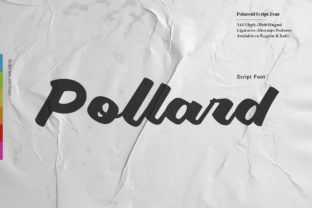
Typography isn’t just about legibility—it’s about voice. And when you need a font that speaks with confidence, warmth, and unmistakable character, Pollard Script steps in like a well-dressed guest who instantly elevates the room. It’s not another delicate, wispy script designed for whispering. Pollard Script is bold, intentional, and refreshingly contemporary—blending calligraphic soul with clean digital precision.
More Than Just a “Pretty Script”
Many script fonts fall into predictable categories: ultra-thin and ethereal, overly ornate and hard to read, or so casual they feel out of place on anything beyond a coffee bag label. Pollard Script avoids those traps entirely. Its letterforms carry weight—notice the confident downstrokes, the generous spacing between characters, and the subtle but deliberate contrast between thick and thin strokes. It’s calligraphy-inspired, yes—but refined for screen and print alike.
What makes Pollard Script stand out isn’t just how it looks, but how it performs. Unlike many display scripts that crumble below 24pt or vanish in small UI elements, Pollard Script maintains clarity at sizes as low as 16pt in headings—and even holds up in tight editorial layouts when used sparingly for emphasis. That versatility is rare. It means designers don’t have to choose between impact and usability.
The Design DNA Behind Its Confidence
Pollard Script was crafted with intention—not trend-chasing. Its baseline rhythm feels natural, not mechanical. Letters connect fluidly where it makes sense (like “th”, “er”, or “ou”), but break cleanly where readability demands it. There’s no forced ligature overload. No arbitrary swirls. Every curve has purpose.
Consider its x-height: generous, but not overwhelming. Its ascenders rise with quiet authority; descenders flow without tangling. And the kerning? Thoughtfully tuned—not just auto-spaced, but hand-adjusted across common word pairs (“The”, “Love”, “Studio”, “Creative”) so headlines land with polish, not guesswork.
This attention shows up in real use: a boutique skincare brand using Pollard Script for its logo *and* product tags—no font-switching required. A wedding invitation suite where the same font carries the couple’s names, the date, and a short poetic line—each treated with visual hierarchy, not visual chaos.
Where Pollard Script Shines (and Where It Doesn’t)
Pollard Script thrives in contexts that benefit from human warmth and confident presence:
- Branding & Logos: Especially for lifestyle, creative services, hospitality, and premium goods. Think artisanal chocolate makers, independent bookshops, architecture studios, or wellness retreats—brands that want to signal craftsmanship without sounding stiff.
- Digital Headlines & Hero Text: On websites and landing pages, Pollard Script adds instant distinction above the fold. Paired with a neutral sans-serif (like Inter, Poppins, or Manrope) for body copy, it creates a dynamic yet balanced typographic rhythm.
- Editorial Highlights: Magazines and newsletters use it for pull quotes, section dividers, or masthead accents—not as body text, but as punctuation with personality.
- Print Collateral: Business cards, letterheads, packaging, and limited-run posters gain tactile sophistication thanks to its strong ink coverage and open counters.
That said, Pollard Script isn’t meant for everything. It’s not ideal for long-form reading, data tables, legal disclaimers, or interfaces requiring rapid scanning (like dashboards or forms). Using it there wouldn’t be a design choice—it’d be a readability compromise. Knowing *when not to use it* is just as important as knowing when to reach for it.
Pairing Pollard Script With Purpose
A great script font doesn’t live in isolation—it gains meaning through contrast. Pollard Script pairs especially well with typefaces that ground its energy without dulling it. Here’s what works—and why:
- Geometric Sans-Serifs: Fonts like Montserrat, Space Grotesk, or IBM Plex Sans provide crisp, modern counterpoints. Their uniform stroke weights and open apertures let Pollard Script breathe while anchoring the layout in structure.
- Humanist Sans-Serifs: Lato, Nunito, or Open Sans add subtle warmth and organic rhythm—ideal when you want harmony over contrast, especially in lifestyle or educational contexts.
- Low-Contrast Serifs: Try Literata or PT Serif for editorial projects where you want elegance without formality. Their gentle serifs echo Pollard Script’s calligraphic roots without competing.
Avoid pairing Pollard Script with other scripts (unless highly intentional and expertly spaced), ultra-thin fonts (it’ll overpower them), or overly decorative display faces (visual noise builds fast). Simplicity around Pollard Script doesn’t diminish it—it clarifies it.
Practical Considerations Before You Use It
If you’re evaluating Pollard Script for a project, ask yourself these questions—not as hurdles, but as checkpoints:
- Is this a moment that deserves emphasis? Pollard Script commands attention. If your message is urgent, joyful, personal, or aspirational, it fits. If it’s transactional or utilitarian, reconsider.
- What’s the primary medium? It renders beautifully on modern browsers and iOS/Android devices. For older email clients or legacy systems, test fallback behavior—or reserve it for image-based headers only.
- Do you have licensing clarity? Pollard Script is available through reputable foundries (like Type Network or independent retailers) with clear web, desktop, and app licenses. Avoid unofficial free downloads—they often lack full character sets, proper hinting, or legal permission.
- How much custom tuning will it need? While well-kerned out of the box, fine-tuning tracking in all-caps headlines or adjusting line height for tight vertical spaces may be needed. That’s normal—and part of professional typesetting.
Real Projects, Real Impact
Take The Wild Folk, a small-batch ceramic studio based in Portland. Their website uses Pollard Script for the logo and collection titles—paired with a soft, airy sans-serif for descriptions. The result? Immediate recognition of craft and care, without a single photo loaded. Customers report feeling “invited in,” not sold to.
Or consider Stellar Review, a quarterly literary journal. Editors use Pollard Script exclusively for author names and section headers—never for body text. Readers consistently cite the typography as “calm but memorable,” helping the writing stay center-stage while giving each issue a distinct, tactile identity.
Even in motion, Pollard Script delivers. Animated logos using its letterforms feel organic—not jerky or over-rendered—because its shapes are built for flow, not flash.
Why Designers Keep Coming Back to Pollard Script
It’s not hype. It’s reliability wrapped in charm. In an era where many brands chase algorithm-friendly minimalism, Pollard Script offers something rarer: authenticity with polish. It doesn’t try to be everything. It knows its role—to give voice, not volume; distinction, not distraction.
And because it’s built for today’s technical realities (OpenType features, variable axes in some versions, responsive-friendly metrics), it doesn’t ask designers to choose between aesthetics and function. You get both—without workarounds.
So whether you're naming a new podcast, designing a restaurant menu, launching a clothing line, or refreshing a nonprofit’s visual identity—consider what happens when you replace safe, expected typography with something that feels genuinely *human*. Pollard Script doesn’t shout. But when it speaks, people listen.