Dandelion Script: Elegant Handwritten Typography
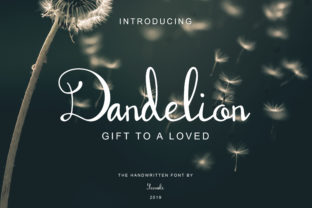
There’s a quiet power in handwriting—the slight variation in line weight, the gentle tilt of letters, the organic rhythm that signals human presence. Dandelion Script captures that essence without feeling overly scripted or stiff. It’s not a calligraphic flourish meant for royal decrees, nor a playful scrawl designed for children’s books. Instead, Dandelion Script is a refined handwritten font with a light feel—airy, graceful, and effortlessly sophisticated. If you’ve ever spent minutes adjusting letter spacing on a wedding invitation, struggled to make a brand voice feel warm yet professional, or hesitated before choosing a font for a boutique product label, Dandelion Script may resolve that tension.
Why Lightness Matters in Handwritten Fonts
Many handwritten fonts fall into one of two traps: they’re either too heavy—visually dense and tiring at small sizes—or too casual, undermining credibility in contexts that demand polish. Dandelion Script avoids both. Its fine strokes and open counters create breathing room, making it highly legible even at 14–16px in digital interfaces like email headers or blog sidebars. That lightness isn’t fragility—it’s intentionality. Designers working on wellness brands, artisanal goods, or educational resources often need typography that feels personal but not unpolished. Dandelion Script delivers precisely that balance: approachable enough for a yoga studio’s newsletter, refined enough for a literary magazine’s masthead.
Where Dandelion Script Strengthens Communication
Typography shapes how readers interpret tone before they read a single word. A bold sans-serif announces authority; a monospace font signals technical precision. Dandelion Script signals warmth, care, and quiet confidence. Consider a freelance educator creating downloadable lesson plans. Using Dandelion Script for section titles and pull quotes adds visual warmth without sacrificing clarity—students and parents alike perceive the material as thoughtful and human-centered. Similarly, small business owners launching a new line of organic skincare might use Dandelion Script on product tags or packaging inserts. The font subtly reinforces values like authenticity and gentleness, aligning visual language with brand ethos—no extra copy needed.
Real Projects, Real Impact
- Bloggers and content creators use Dandelion Script for featured quote graphics. Its natural flow makes text feel excerpted from a personal journal rather than generated by an algorithm—increasing perceived relatability and engagement.
- Wedding stationers pair Dandelion Script with a clean serif (like Playfair Display) for names and dates. The contrast gives hierarchy while preserving elegance—no need for elaborate flourishes or custom lettering.
- Educators designing classroom posters apply Dandelion Script to motivational phrases (“You’ve got this,” “Ask questions”)—its softness reduces visual pressure, helping students absorb messages more readily than stark, high-contrast type.
- Independent publishers choose Dandelion Script for chapter title pages in poetry chapbooks or memoirs. Its lyrical rhythm mirrors the cadence of literary prose, reinforcing narrative tone without competing with the text itself.
When to Reach for Dandelion Script—and When to Pause
Dandelion Script shines in supportive roles: headlines, short quotes, logos, labels, and interface elements where personality matters more than dense information delivery. It’s not ideal for body text in long-form documents, legal disclaimers, or data-heavy dashboards—its light weight can reduce readability at smaller sizes or on low-resolution screens. Likewise, if your project demands strong cultural specificity (e.g., traditional East Asian calligraphy aesthetics or bold Latinx mural typography), Dandelion Script’s neutral, Western-leaning elegance may not resonate as deeply. Always test it in context: render it at actual size on the devices your audience uses, and ask yourself whether it supports—or distracts from—the message.
Pairing With Purpose
One reason Dandelion Script integrates so smoothly into diverse projects is its versatility in pairing. Its modest x-height and restrained contrast allow it to coexist gracefully with both high-contrast serifs and friendly, rounded sans-serifs. Try it with Lora for editorial layouts—Dandelion Script handles headings while Lora carries paragraphs with quiet authority. For digital products, combine it with Inter or Manrope: the contrast between Dandelion Script’s organic movement and Inter’s geometric clarity creates visual interest without chaos. Avoid pairing it with other handwritten fonts—even subtle ones—as layering scripts often introduces unintended competition or visual noise.
Efficiency Without Compromise
Time is a constant constraint, especially for solopreneurs and freelancers managing design alongside client calls, invoicing, and strategy. Dandelion Script reduces decision fatigue. Unlike fonts requiring extensive kerning adjustments or manual ligature toggling, Dandelion Script ships with well-tuned spacing and standard OpenType features (including contextual alternates). You’ll spend less time finessing letter combinations and more time refining layout, color, or content. For Canva or Figma users building reusable templates—think social media quote cards or workshop handouts—saving Dandelion Script as a preset style means consistent, elevated typography across dozens of assets, with zero rework.
A Note on Licensing and Practical Use
Dandelion Script is available under standard desktop and web font licenses. If you’re embedding it in a client website, confirm the license covers the expected monthly pageviews. For printed materials—business cards, brochures, packaging—it works flawlessly with standard PDF export workflows. No special plugins or font-subsetting tools are required. Just install the OTF or WOFF2 file, select it in your design app or CSS, and go. That simplicity matters when you’re iterating quickly or handing off files to printers or developers who may not share your font library.
Who Benefits Most—and Why
The designers, educators, and entrepreneurs who gain the most from Dandelion Script aren’t necessarily those seeking “trendy” fonts—they’re those solving real communication problems with restraint. A therapist launching a private practice website might use Dandelion Script for the tagline (“Gentle support for meaningful change”) to convey empathy without cliché. A ceramicist listing on Etsy could apply it to product descriptions (“Hand-thrown in Portland, Oregon”)—adding artisanal credibility without overstating. Even marketers running A/B tests on landing page headers sometimes find Dandelion Script outperforms bolder options in conversion rate for audiences valuing calm, trust, and nuance over urgency.
In short, Dandelion Script doesn’t shout. It invites. It doesn’t decorate—it clarifies intent. And in a world saturated with visual noise, that quiet sophistication isn’t just aesthetic. It’s functional.