Biyanka Robert: The Crafting Font with PUA Swashes
When you’re designing a handmade greeting card, launching a small-batch candle brand, or building a workshop handout that feels warm and intentional—typography isn’t just decoration. It’s tone, trust, and texture all at once. That’s where Biyanka Robert stands apart: not as another decorative script, but as a thoughtfully crafted tool built for real creative work.
What Makes Biyanka Robert Distinct—and Useful
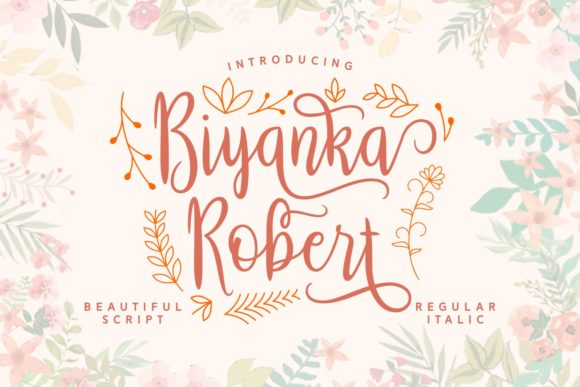
Biyanka Robert is a flowing, hand-drawn script font with expressive letterforms and generous spacing. Its defining feature? A full set of PUA-encoded swashes—meaning alternate flourishes, entry/exit strokes, and contextual ligatures are accessible without complex OpenType features. You don’t need design software with advanced typographic controls to access them. In tools like Canva, Affinity Designer, or even recent versions of Google Docs (via font upload), you can insert swashes directly using the private use area (PUA) character map.
This practicality matters. Swashes aren’t just “pretty extras.” They let you emphasize a name on a wedding invitation, add rhythm to a blog header, or give hierarchy to a product label—without switching fonts or layering graphics. Biyanka Robert delivers that flexibility out of the box, with consistent weight, balanced x-height, and clear letter distinction—even in smaller sizes.
Crafting With Purpose: Real Applications
Designers and makers often reach for scripts too early—then struggle with legibility, licensing, or inconsistent spacing. Biyanka Robert avoids those pitfalls by anchoring its charm in usability:
- Small business branding: A ceramicist uses Biyanka Robert for her logo and product tags, pairing it with a clean sans-serif (like Inter or Manrope) for body text. She swaps the default “R” for a swash version in her shop name—just once—to create subtle visual interest without sacrificing clarity.
- Educational printables: An educator designing classroom posters replaces generic clipart headers with Biyanka Robert headings. She uses the swash “B” only on the main title (“Back-to-School Goals”) and keeps subheadings simple—creating emphasis through restraint.
- Digital content: A wellness blogger uses Biyanka Robert for Instagram quote graphics. She types the quote first, then manually inserts swash characters (like the descending “y” or looping “k”) only where they support meaning—not everywhere. This avoids visual noise while keeping warmth intact.
Adapting for Audience and Platform
How you use Biyanka Robert changes based on who’s seeing it—and where:
For print projects (packaging, stationery, zines), print at 12 pt or larger when using swashes. Test contrast: pair with uncoated paper or matte finishes to soften sharp edges and enhance tactility. Avoid overloading paragraphs—reserve swashes for initials, drop caps, or short phrases.
For web and social, stick to SVG or static PNG exports for headlines—don’t embed Biyanka Robert as live web font unless your site supports PUA fallbacks reliably. For accessibility, always provide alt text describing the visual intent (“handwritten-style heading with elegant ‘R’ swash”). On platforms like Etsy or Pinterest, use Biyanka Robert in mockup images—not as text overlays that get cropped or compressed.
For educators and nonprofits, Biyanka Robert works well in bilingual materials when paired with a legible companion font. Its open counters and moderate stroke contrast help readers with dyslexia or low vision distinguish letters more easily than tightly spaced, high-contrast scripts.
Keeping It Clear, Consistent, and Original
Swashes invite play—but consistency keeps your work readable and professional. Here’s how to stay grounded:
- Define one primary swash usage rule for each project—for example, “Only the first letter of section headers gets a swash,” or “Swashes appear only in logos and cover art.” Write it down. Revisit it before exporting.
- Test at actual size: Zoom out to 50% in your layout app. If letter connections blur or spacing collapses, simplify. Biyanka Robert shines when breathing room remains between characters.
- Avoid mixing too many scripts. If you’re using Biyanka Robert for headings, choose a neutral sans-serif or gentle serif for body copy—not another script or display font. Contrast should come from structure, not style overload.
- Respect licensing. Biyanka Robert is typically licensed for personal and commercial use, but check your source. Some versions restrict use in SaaS platforms or resaleable templates—clarify before scaling.
Ideas That Spark—Without Overcomplicating
You don’t need a grand concept to begin. Try these low-lift, high-impact experiments:
- Create a printable habit tracker where the month name (“March”) uses Biyanka Robert with the swash “M”, while checkboxes and notes stay in a functional sans-serif.
- Design a mini zine cover using Biyanka Robert for the title and one supporting swash (e.g., the dotted “i” or extended “t”), then use the same color palette and baseline alignment for interior pages—even if they’re set in a different font.
- Redesign your email signature: Use Biyanka Robert for your first name only, with a single swash character (the “B” or “R”), and keep job title and contact info in a clean, scalable font.
These aren’t about perfection. They’re about intention—using Biyanka Robert as a deliberate choice, not a default. That shift alone changes how people experience your work: warmer, more considered, quietly confident.
Why This Font Fits Your Workflow—Not Just Your Mood
Creative tools should serve your goals—not distract from them. Biyanka Robert does that by meeting practical needs: PUA swashes mean no plugin dependencies; its OpenType-ready structure supports future upgrades; its balanced metrics reduce kerning adjustments; and its human rhythm avoids the stiffness of AI-generated scripts.
It won’t solve every design challenge. But when you need typography that feels handmade without demanding hours of manual lettering—it’s a reliable starting point. Not because it’s “trendy,” but because it’s built for craft: tested spacing, thoughtful alternates, and quiet versatility.
So open your design file. Type one word. Try the swash “R”. See how it lands—not just visually, but functionally. Then build from there. Your next project doesn’t need more complexity. It needs clarity, care, and the right kind of elegance. Biyanka Robert offers that—without asking you to compromise on either craftsmanship or control.