Lated Font: A Timeless Serif for Vintage-Inspired Design
When you’re crafting a design that whispers elegance, nostalgia, or quiet sophistication—think café menus, artisanal product labels, wedding invitations, or book covers—the right typeface can do more than convey words. It sets the mood, evokes memory, and anchors your message in a distinct visual era. Lated is one such font: a friendly serif with unmistakable classic charm and deliberate vintage appeal. Designed not as a historical replica but as a thoughtful reinterpretation, Lated bridges tradition and usability—making it both authentic and highly functional in today’s digital-first creative landscape.
What Is Lated—and Why Does It Stand Out?
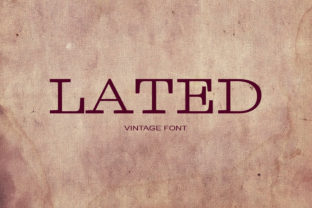
Lated is a serif typeface developed with warmth and approachability at its core. Unlike high-contrast Didones (like Bodoni) or rigid transitional fonts (like Baskerville), Lated features gentle stroke modulation, open counters, and subtly rounded terminals—giving it a soft, humanist feel while retaining strong typographic structure. Its letterforms echo early 20th-century American and European printing traditions, particularly the kind seen in small-town newspapers, hand-set posters, and mid-century stationery—but without the fragility or excessive ornamentation that can hinder readability at smaller sizes.
What makes Lated truly distinctive isn’t just its appearance—it’s its intentionality. Every curve, spacing decision, and weight variation was crafted to support legibility across mediums: from printed business cards to responsive web typography. That balance—between character and clarity—is rare among vintage-inspired fonts, many of which sacrifice function for flair.
The “Friendly” in Friendly Serif: A Closer Look
“Friendly serif” isn’t marketing jargon—it’s a meaningful descriptor. In typography, “friendliness” often emerges from:
- Generous x-height: Makes lowercase letters more prominent and easier to read, especially at small sizes.
- Open apertures: Wider openings in letters like a, e, and s improve recognition and reduce visual crowding.
- Soft contrast: The difference between thick and thin strokes is moderate—not dramatic—so text feels even and inviting rather than stark or demanding.
- Warm proportions: Slightly wider characters and relaxed spacing create breathing room, reducing cognitive load for readers.
Lated embodies all four. That’s why designers choose it not just for retro aesthetics—but for real-world performance in branding, editorial design, and user interfaces where tone matters as much as information.
Where Lated Fits in Modern Creative Work
Vintage doesn’t mean outdated—and Lated proves it. Its relevance spans industries and applications, adapting gracefully whether you're designing for print, screen, or motion.
In Branding & Small Business Identity
Small businesses—from independent bakeries to boutique studios—increasingly lean into authenticity over generic polish. A logo set in Lated instantly signals craftsmanship, care, and time-honored values. For example, a local candlemaker might use Lated Bold for their logo and Lated Regular for ingredient labels—creating visual continuity that feels handmade yet professional. Unlike overly distressed or “grungy” fonts, Lated avoids cliché; its vintage quality comes from proportion and rhythm, not artificial wear.
In Publishing & Editorial Design
Books, zines, and literary magazines benefit from typefaces that invite sustained reading. Lated’s balanced metrics and clear hierarchy (especially in its italic and small caps variants) make it ideal for chapter headings, pull quotes, and body text in long-form print pieces. One indie publisher recently used Lated across an anthology of regional folk tales—its gentle serifs echoed the oral, communal nature of the stories without distracting from their emotional weight.
In Web & UI Design
Yes—even on screen. With proper web font implementation, Lated performs beautifully in responsive layouts. Its optimized hinting ensures crisp rendering on both Retina and standard displays. Designers have successfully paired Lated with clean sans-serifs (like Inter or Open Sans) for hybrid interfaces—using it for headlines and calls-to-action to add warmth and distinction without compromising accessibility.
Common Misconceptions About Vintage Fonts
Before choosing Lated—or any nostalgic typeface—it helps to clarify what vintage typography *isn’t*:
- Vintage ≠ Illegible: Some assume old-looking fonts must be hard to read. Not true. Lated prioritizes clarity first—its vintage flavor emerges from subtle details, not obscurity.
- Vintage ≠ Just for “Retro” Projects: While perfect for 1940s-themed events or vinyl record sleeves, Lated also works in contemporary contexts where calm, confidence, and quiet authority are valued—like wellness apps or academic journals.
- Vintage ≠ Static or Unchanging: Lated includes multiple weights (Light to Bold), true italics, and extensive language support—including Latin Extended-A, Vietnamese, and basic Cyrillic. It’s built for global, modern use—not museum display.
How to Use Lated Effectively (Without Overdoing It)
Even the most beautiful font can weaken impact if misapplied. Here’s how to get the most from Lated:
- Pair thoughtfully: Contrast is key. Try Lated for headings with a neutral, highly legible sans-serif (e.g., Manrope or IBM Plex Sans) for body text. Avoid pairing it with other decorative or high-contrast serifs—that creates visual competition.
- Respect hierarchy: Use Lated Bold sparingly—for logos or section titles—not full paragraphs. Let its Regular and Italic weights carry narrative weight.
- Test in context: View your design at actual size and on target devices. A font that looks elegant at 72pt may lose nuance at 14px on mobile. Lated’s robust hinting helps, but real-world testing is essential.
- Consider licensing: Lated is available under both desktop and web licenses. If you’re using it on a live website or SaaS platform, ensure your license covers the intended usage volume and domain count.
Why Lated Matters Beyond Aesthetics
In an age of algorithmic feeds, rapid-scroll content, and visual noise, intentional typography becomes an act of respect—for your audience’s attention, for craft traditions, and for meaning itself. Lated invites pause. Its gentle serifs suggest patience. Its consistency implies reliability. And its quiet confidence offers an alternative to the loud, fast, and fleeting.
That’s why educators use it in classroom handouts—to signal thoughtfulness and care. Why nonprofits choose it for annual reports—to reflect integrity and legacy. Why developers embed it in documentation sites—to soften technical complexity with approachable form.
It’s not just about looking “old.” It’s about feeling grounded.
Getting Started With Lated Today
Ready to explore Lated in your next project? Start by visiting the official foundry site to preview specimens, test line heights, and download trial files. Many design platforms—including Figma, Adobe Creative Cloud, and Canva—support Lated via plugin or manual upload. For web projects, generate optimized CSS snippets using tools like Google Fonts (if hosted there) or self-host with @font-face declarations.
Remember: great typography begins with understanding—not just selecting. Ask yourself: What emotion should this text evoke? Who is reading it—and where? What story does the type tell before a single word is read? When you answer those questions, Lated won’t just look right. It’ll feel inevitable.
Whether you're a student learning layout principles, a marketer building brand voice, or a developer refining UI texture—Lated offers more than style. It offers substance with soul. And in design, that’s timeless.