Santa Claus: The Ultimate Christmas Font
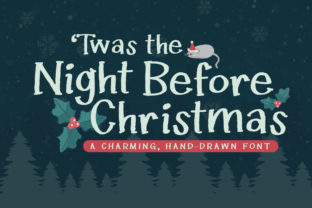
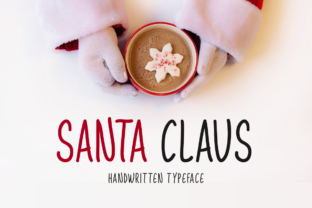
When you need a typeface that instantly evokes warmth, nostalgia, and joyful celebration—without leaning into kitsch or cliché—Santa Claus stands apart. It’s not just another holiday font with bells and bows tacked on. Santa Claus is a carefully crafted display typeface rooted in classic American woodtype traditions, refined with modern rhythm and readability. Its bold, rounded letterforms carry generous spacing, soft curves, and subtle personality—making it both festive and functional.
Why Designers Reach for Santa Claus First
Unlike many seasonal fonts that sacrifice legibility for ornamentation, Santa Claus balances charm with clarity. Each character has consistent stroke weight, open counters, and generous x-height—so it performs well across sizes and formats. Whether you’re designing a small business holiday card, a social media banner, or a limited-edition product label, Santa Claus delivers immediate recognition without visual noise.
Its versatility lies in restraint: no excessive swashes, no forced snowflakes embedded in letters, no distracting textures. Instead, it uses gentle modulation—slight tapering on stems, friendly terminals, and harmonious proportions—to suggest cheer without shouting. That makes it ideal for brands and creators who want holiday spirit *with intention*, not just decoration.
Creative Applications Across Real Projects
Designers and marketers use Santa Claus where tone matters as much as timing—especially during the high-stakes holiday season. Here’s how it translates across contexts:
- Small business packaging: A local bakery prints “Holiday Gingerbread” in Santa Claus on kraft paper bags—paired with clean sans-serif body text. The contrast feels handmade but professional, warm but trustworthy.
- Digital campaigns: An eco-conscious retailer uses Santa Claus for email subject lines (“Your Gift Is Wrapped & Ready!”) while keeping interface text in a neutral, accessible font. The result? Instant emotional resonance without compromising usability.
- Educational materials: A teacher creates a December reading chart with Santa Claus headers and student-friendly sans-serif subheadings. Kids recognize the theme immediately; the font supports engagement—not distraction.
- Printed invitations: Freelance stationers layer Santa Claus over textured watercolor backgrounds. Because the font avoids fine details, it holds up beautifully in print—even at 12 pt for RSVP lines.
Adapting Santa Claus for Different Audiences
Who you’re speaking to determines how far you push the style—and Santa Claus responds well to thoughtful adaptation:
- For children’s audiences: Use Santa Claus at larger sizes (48+ pt), pair it with bright, flat-color backgrounds, and add simple icons (a candy cane, mittens) as bullet points—not inside the letters. Keep line spacing generous to support early readers.
- For luxury or heritage brands: Set Santa Claus in deep navy or forest green on cream stock. Add minimal foil stamping only on key words (“Joy,” “Gather,” “Give”). Let the font’s inherent dignity do the work.
- For digital-first creators: Test Santa Claus in SVG format for crisp rendering on mobile. Avoid using it for long paragraphs—but it shines in animated headers (e.g., “Merry Everything” fading in on an Instagram Story).
- For educators and nonprofits: Combine Santa Claus with free, open-source fonts like Inter or Nunito for accessibility. Use it for event titles (“Winter Warmth Drive”) and keep supporting text highly legible for all ages and abilities.
Styling Tips That Keep It Effective
Santa Claus invites play—but stays strongest when grounded in purpose. Here’s what works in practice:
- Limit color use: One primary color + one neutral works best. Overlayering red/green/gold dilutes impact. Try Santa Claus in charcoal on ivory, then accent with a single spot color for buttons or icons.
- Avoid distortion: Don’t stretch, skew, or apply heavy outlines. Its strength is in its natural shape. If you need variation, explore Santa Claus’ built-in alternates (many versions include stylistic sets for “A,” “R,” and “S”).
- Respect hierarchy: Use Santa Claus strictly for headlines, logos, or short calls-to-action. Never for body copy, captions, or navigation. Pair it with a highly legible, low-contrast sans-serif—never another decorative font.
- Test at real size: Preview your design on actual devices or printed mockups. Santa Claus reads well at 24–96 pt—but loses nuance below 18 pt. If your use case requires smaller text, choose a complementary heading font instead.
Where Santa Claus Fits in Your Creative Workflow
Think of Santa Claus not as a “holiday-only” asset, but as a reliable tool for moments requiring instant emotional alignment. It belongs in your go-to folder alongside your most trusted display fonts—not buried in a “seasonal” subfolder you forget until December.
For freelancers building brand guidelines: Include Santa Claus as an approved seasonal variant—defined by clear usage rules (e.g., “Used only in Q4 campaigns; never in email footers or legal disclaimers”). For bloggers and content creators: Save a branded Santa Claus + sans-serif template in Canva or Figma for recurring holiday graphics—so consistency happens automatically.
And for entrepreneurs launching physical products: Use Santa Claus on hang tags, not boxes. On recipe cards, not ingredient lists. Precision in placement reinforces professionalism—even during festive moments.
Final Thought: Festivity With Focus
Santa Claus endures because it understands a core truth: the best holiday design doesn’t try to do everything at once. It gives people a moment of recognition, comfort, and delight—then gets out of the way. That’s why it works for a handmade candle label and a national retail campaign alike. It carries tradition without rigidity, joy without clutter, and personality without pretense.
If you’ve hesitated to use seasonal fonts before—worried they’ll date your work or alienate part of your audience—Santa Claus offers a different path. It’s designed to serve your message, not overshadow it. Try it where warmth matters, clarity counts, and authenticity is non-negotiable. Then step back and let the type do what it does best: connect.