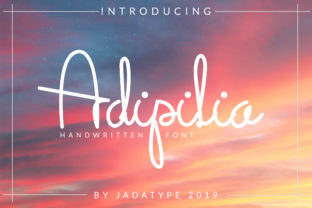
Adipilia: A Sweet, Friendly Script Font
If you’ve ever seen a hand-lettered bakery sign that made you smile before you even read the words—or a wedding invitation that felt like a warm hug—you’ve felt the quiet power of a font like Adipilia. It’s not flashy or loud. It doesn’t try to dominate. Instead, Adipilia invites. Its curves are soft but intentional, its rhythm relaxed but never sloppy. As a script font, it leans into natural motion—like ink flowing from a flexible nib—but with enough polish to feel trustworthy in professional work.
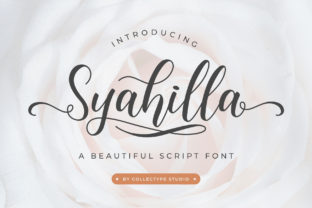
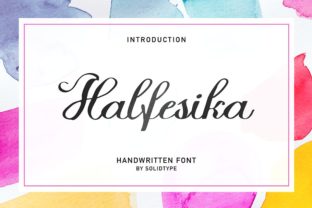
Visually, Adipilia balances warmth and clarity. The lowercase ‘a’, ‘g’, and ‘y’ have gentle, open counters; the terminals taper with subtle flair, not sharpness. There’s no aggressive contrast between thick and thin strokes—just a friendly, even-handed variation that keeps things legible at medium sizes. It’s not a handwritten font in the raw, unedited sense—no shaky lines or inconsistent spacing—but it carries authenticity through thoughtful imperfection: a slight tilt here, a lifted crossbar there, a pause built into the flow. That’s what gives it its authentic charm.
Where Adipilia Fits Naturally (and Where It Doesn’t)
Adipilia shines brightest as a display font—not for body text, but for moments that need personality with purpose. Think: café menu headers, boutique packaging tags, Instagram story quotes, book chapter openers, or logo lockups for lifestyle brands. Its warmth reads instantly, especially alongside clean, neutral companions—like a well-cut serif or a restrained sans serif.
It works beautifully in editorial design when used sparingly: a pull quote in a wellness magazine, a section divider in a recipe zine, or the title treatment on a craft-focused newsletter. In packaging design, Adipilia adds approachability—imagine it on a small-batch honey label or a linen tea towel. For social media graphics, it brings humanity to promotional posts without sacrificing polish. And yes—it’s been used thoughtfully in logo design for yoga studios, floral shops, and indie stationery lines, where brand identity leans into sincerity over slickness.
What it doesn’t do well? Long paragraphs. Fine print. Technical documentation. Crowded UI buttons. As a script font, it trades some functional neutrality for expressive character—and that’s by design. Trying to force it into contexts where speed, precision, or universal legibility are non-negotiable will dilute its strength and frustrate your audience.
How It Shapes Perception—Without Saying a Word
Typography is silent body language. Adipilia communicates friendliness, care, and craftsmanship—not because it’s “cute,” but because its construction reflects intentionality and human scale. When paired with strong visual hierarchy (e.g., bold Adipilia headlines over light, airy body text), it guides attention while keeping tone consistent. That consistency builds recognition: repeat that pairing across your website, email footers, and product tags, and people begin to associate that rhythm with your voice.
For small business owners and content creators, that’s practical value. A handmade soap brand using Adipilia on labels and Instagram captions signals continuity—not just aesthetically, but emotionally. Readers don’t think, *“Oh, they use a nice font.”* They feel, *“This feels like someone who pays attention to details—and to how things make me feel.”* That subtle alignment supports trust, which supports conversion, which supports longevity.
Testing, Pairing, and Practical Decisions
Before committing, test Adipilia in context—not just as a sample word, but as part of your actual layout. Try it at 36pt on a mockup of your product tag. Paste it into your email template preview. Drop it into a Canva social post and view it on mobile. Does it hold up at that size? Does it compete with your photography or illustrations—or complement them?
Pairing matters. Adipilia sings next to typefaces with quiet confidence: a low-contrast serif like Recoleta or IBM Plex Serif, or a geometric sans like Manrope or Inter. Avoid overly decorative or high-contrast partners—they’ll clash tonally. Also avoid other script fonts in the same composition; two personalities rarely share the spotlight gracefully.
Check what’s included. Most premium font licenses for Adipilia include regular and bold weights, plus standard OpenType features like ligatures and stylistic alternates. These aren’t flourishes for flourish’s sake—they’re tools. Turn on discretionary ligatures for smoother connections in headlines. Use the alternate ‘&’ if your brand uses ampersands often. These small refinements add up in perceived professionalism.
Licensing, Legibility, and Realistic Expectations
Adipilia is a commercial font, meaning you’ll need a license for any public-facing use—even if you’re a solo blogger monetizing via affiliate links or a crafter selling prints on Etsy. Most reputable vendors offer clear, tiered licensing: desktop-only, webfont, app embedding, or extended use. Read the fine print. If you’re building a client’s Shopify site, confirm the license covers web use. If you’re designing packaging for resale, verify it includes unlimited print runs.
Legibility hinges on size, spacing, and contrast. At 24pt+, Adipilia reads cleanly against light backgrounds with sufficient contrast (avoid pale yellow text on cream paper). Tight tracking can blur its charm—give letters room to breathe. And while it’s designed for Latin-based languages, double-check glyph coverage if you plan to use accented characters regularly.
Finally—don’t chase perfection. Adipilia’s appeal lies in its warmth, not its uniformity. A slight variation in baseline or stroke weight isn’t a flaw. It’s evidence of craft. Use it where that humanity enhances your message, not where it distracts from it. Whether you’re a designer choosing assets for a client pitch or a hobbyist printing holiday cards, let Adipilia do what it does best: connect, gently and memorably.